From zero online presence to a complete digital commerce operation.
- Impact
- 10× sales growth
- Project
- Libsi Markah
- Role
- Digital Transformation & Product Design
- Year
- 2020 — 2026
- Platform
- Web · Native iOS & Android · Commerce
Context
Libsi Markah is a medium-to-large fashion retailer in Saudi Arabia with an established branch network and real brand equity — and, until this engagement, no online presence at all.
Meanwhile the market had moved. Saudi fashion customers now discover, compare, and buy online, and every season without a digital channel handed share to competitors who had one. The company decided to compete — properly.
Problem
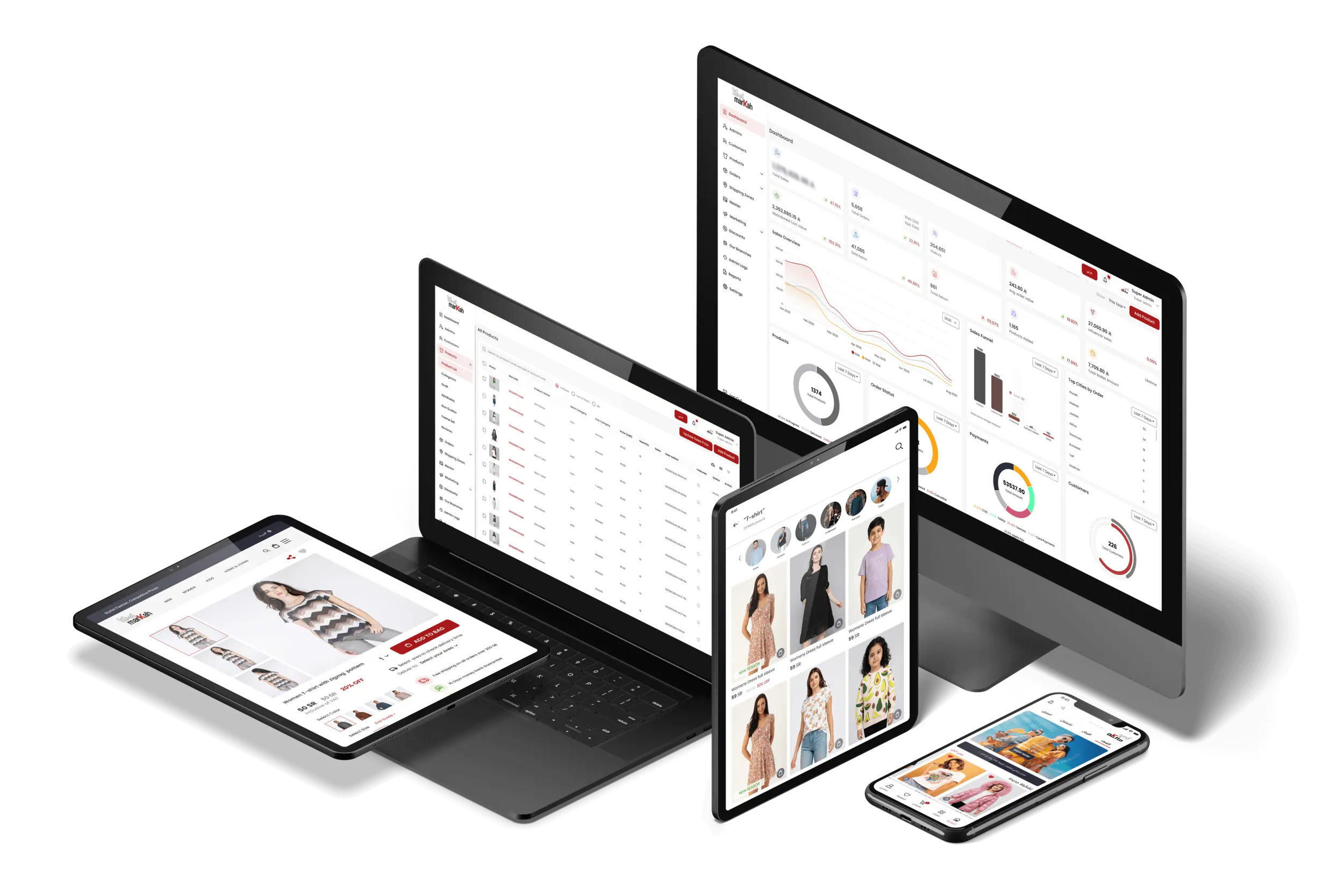
This was not a “build us a website” brief. Competing at parity meant launching a complete commerce operation in one move: a storefront with the full e-commerce feature set, native mobile apps, and the machinery fashion retail actually runs on — retention marketing, loyalty, influencer reach, and returns management.
The real risk was fragmentation: buying pieces from different vendors and ending up with a collection of tools instead of an operation.
My Role
I led the product side of the transformation — defining the strategy and requirements, designing the customer experience, and selecting and directing the engineering agency that built it. One product direction, one accountable owner, from brief to launch.
- Digital transformation direction
- Product strategy and requirements
- Customer experience and journey design
- Engineering agency selection and direction
- Retention, loyalty, and influencer program design
- Returns management workflow
Strategy
Launch complete, not piecemeal. A token webshop would have confirmed the market's assumption that the brand wasn't serious online. The call was to arrive at feature parity with the strongest competitors on day one — storefront, native apps, and retention working as one system.
Sequence still mattered inside that: foundation and design system first, then the storefront and apps, then the growth machinery on top.
Transformation Approach
The full e-commerce feature set was specified as one product: catalogue and merchandising, cart and checkout, payments, shipping, and a returns management flow built for fashion's exchange-heavy reality.
On top of the storefront: native iOS and Android apps as the primary retention surface, a loyalty program, lifecycle retention marketing, and an influencer marketing engine that turned the brand's offline reputation into online reach.
Experience Design
Everything is designed Arabic-first. RTL is not a mirrored afterthought — layout, typography, and content hierarchy are designed for Arabic reading order, with English as the secondary direction.
Customer communications — lifecycle emails and campaign templates — were rebuilt on the same system, so the brand speaks with one voice from the first touch to post-purchase.
Implementation
Engineering was delivered by a carefully selected agency working under my product direction — requirements, designs, and acceptance criteria came from one place, which kept a multi-vendor build coherent from brief to launch.
The app entry infrastructure runs on AWS — S3, CloudFront, ACM, and Route 53 — serving the brand's app domains with device-aware routing. The design system ships as reusable tokens and components, so partners build against a specification rather than interpreting screenshots.
Outcome
Sales grew 10× after the digital operation launched. A brand that had no online presence now runs digital as a primary growth engine — storefront, native apps, retention, loyalty, and returns working as one system.
Reflection
The lesson wasn't about technology — it was about completeness. Established retailers don't lose online because they lack a website; they lose because they launch half an operation. Arriving with the whole system — commerce, apps, and the growth machinery — is what made the 10× possible.
Contact
Have a business or product challenge worth solving?
Tell me what you’re building, transforming, or trying to improve.